

Countertop Edge Profiles: How to Choose the Best Edge for Your Kitchen
Last Update: 2025
Choosing your countertop edge is a personal preference, but it’s also a decision that affects how you experience your kitchen every single day. The edge profile impacts safety, cleaning, how liquids spill, how crumbs collect, and how resistant the counter is to chipping or wear. As Charles Eames famously said, “The details are not the details. They make the design.”
Because you’ll live with your countertop choice for years (and because edges are difficult and expensive to change later), it’s worth choosing carefully. Below you’ll find a modern, updated breakdown of the most popular countertop edge profiles in 2025 — along with practical considerations to help you make the best choice for your home.
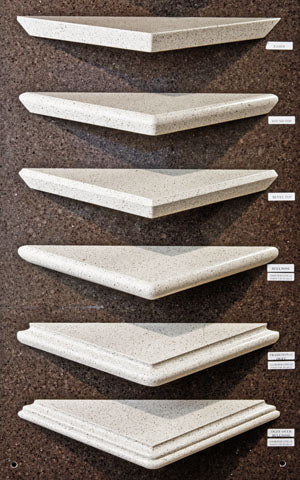
Countertop Edge Styles Explained
There are dozens of countertop edge designs, but almost all fall into four main categories. Understanding these groups makes selecting the right one much easier.
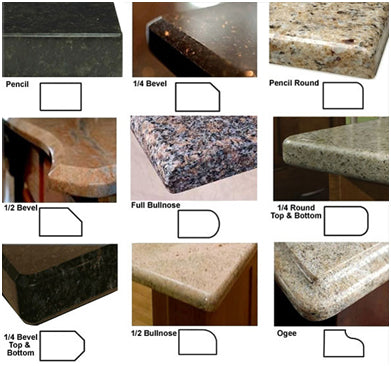
Essential (Standard) Edges

Photo by Orren Pickell Building Group
These are the classic, go-to edges that fabricators offer as standard options — making them both popular and cost-effective.
Common essential profiles include:
- Eased / Square (a softened 90° corner)
- Straight / Flat Polished
-
Beveled (typically a 45° angle cut)
Even though they’re called “straight” or “square,” these edges are slightly eased for comfort and to help protect the stone from chipping. This family of edges is the most popular choice in 2025 thanks to its clean look and versatility.
Best for: modern, contemporary, transitional, or minimalist kitchens
Benefits: easy to clean, subtle, timeless, and usually included at no extra cost
Considerations: edges are simple, not decorative, and aren’t meant to stand out
Soft (Family-Friendly) Designs
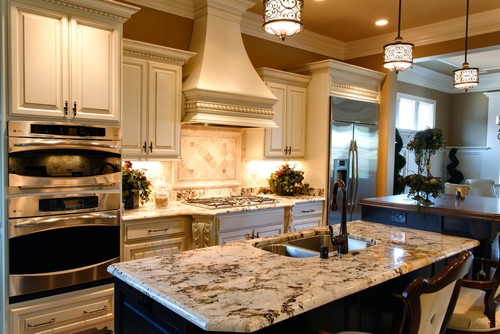
Photo by Robin Straub - Look for kitchen pictures
Soft, rounded edge profiles are perfect for homes where safety and comfort are top priorities.
Common soft edges include:
- Bullnose (fully rounded top and bottom)
- Half Bullnose (rounded top, flat bottom)
-
Rounded / Radius edges (¼ or ½ round)
These profiles reduce sharp corners and are especially ideal if you have kids. Anyone who has watched a toddler wobble past a stone countertop knows that peace of mind matters. The smooth curves also make wiping down countertops easy — though crumbs can sometimes slip underneath the curve.
Best for: family homes, high-traffic kitchens, softer or more organic styles
Benefits: most toddler-friendly option, chip-resistant, comfortable to lean against
Considerations: rounded edges can soften the visual “thickness” of the countertop
Decorative / Traditional Edges
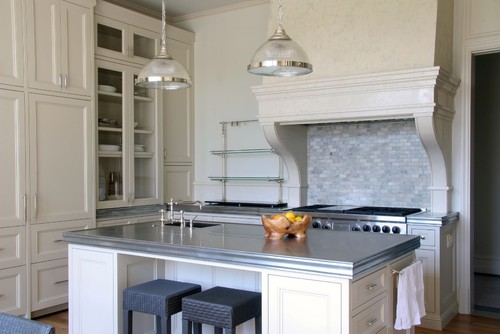
Photo by Studio William Hefner
These edges feature more intricate shaping, lending a sense of elegance and craftsmanship.
These edges feature more intricate shaping, lending a sense of elegance and craftsmanship.
Common decorative profiles include:
- Ogee
- Dupont
- Cove
-
Stepped or stacked edges
These are best suited for natural stones like granite and quartzite, which can handle more elaborate shaping. Because the designs are more complex and require more material depth, they typically fall into the premium category.
Best for: classic, traditional, or luxurious kitchen designs
Benefits: adds visual richness, pairs well with ornate cabinetry or marble-look stones
Considerations: more expensive, more detailed to clean, and can feel overly formal in modern spaces
Modern Statement Edges

Modern statement edges are bold design features intended to elevate the entire kitchen.
Popular statement edges include:
- Mitered edge (two 45° cuts joined to create a thick, seamless edge)
-
Waterfall edge (the countertop material flows vertically down to the floor)
These edges create a dramatic, high-end look and are often used on islands or focal-point areas. They require more fabrication skill and more stone, so they tend to be pricier — but the visual impact is undeniable.
Best for: modern luxury kitchens, islands, open-concept spaces
Benefits: eye-catching, sculptural, enhances the thickness and presence of the stone
Considerations: higher cost and requires precise installation and support planning
Pros & Cons Comparison Table

Best Countertop Edge for Each Material Type
Every countertop material behaves differently, and the right edge can enhance both performance and aesthetics.
Quartz Edges
- Works beautifully with eased/straight edges for a clean, contemporary look
- Ideal for mitered or waterfall edges due to consistent patterning
- Durable material means most profiles are feasible
Granite Edges
- Bullnose, half-bullnose, and beveled edges highlight granite’s natural grain
- Ogee works well in traditional designs
- Half-bullnose can visually amplify thickness
- Good for intricate edge details due to stone hardness
Quartzite Edges
- Extremely strong stone, excellent for dramatic bevels
- Perfect for mitered or waterfall edges on statement islands
- Holds sharp details without chipping easily
Marble Edges
- Softer stone — best paired with rounded or eased edges
- Avoid sharp square edges to reduce chipping risk
-
Ogee is common on vanities but should be chosen with care for heavy-use kitchens
Butcher Block / Wood Edges
- Naturally soft material — works best with round-over or eased edges
- Reduces denting and splintering
- Great for family homes and farmhouse-style designs
Don’t Forget About Support for Overhangs and Waterfall Designs
No matter which countertop edge you choose, proper support is essential — especially for extended overhangs, bar tops, floating counters, or waterfall islands. Many modern edge styles (like mitered or waterfall designs) require additional reinforcement to keep your countertops safe, stable, and compliant with fabrication standards.
If your project includes a large countertop overhang or a sleek, open design where traditional corbels would look bulky, consider using hidden countertop support brackets. These low-profile brackets provide the strength your stone surface needs while keeping your design clean and unobstructed.
As the creator of The Original Granite Bracket®, we specialize in strong, concealed supports engineered specifically for heavy countertop materials like granite, quartz, marble, and quartzite. If you want added safety without compromising your style, explore our collection of hidden brackets to find the right solution for your kitchen layout.
When it comes to countertop edges we have to admit we are not the experts, but we do know a lot of them. We have proven professionals whom we have been honored to work with. Those who know the importance of protecting those precious countertops and countertop edges with our Hidden Granite Countertop Support Brackets.

Our Hidden Island Support Bracket
Choosing the Best Countertop Edge for Your Kitchen
Selecting the right countertop edge profile is one of those small design choices that has a surprisingly big impact on how your kitchen looks, feels, and functions every day. Whether you prefer a clean, modern eased edge, a family-friendly rounded profile, or a bold mitered or waterfall statement, the best choice will always be the one that fits your style, your countertop material, and the way your household actually uses the space.
As you take your kitchen into 2026, these edge styles reflect the trends we’re seeing right now — from minimalist lines to warm, sculptural curves and dramatic waterfall finishes. But design is always evolving. It will be exciting to see what the coming year brings in terms of countertop materials, textures, and the details that continue to shape our spaces. Keeping an eye on emerging trends ensures your kitchen stays both functional and beautifully current.
Kitchens are meant to be lived in, so as you finalize your countertop selection, think about how the edge handles spills, how easy it is to keep clean, and how comfortable it is to lean against. With the right edge profile paired with a countertop you love, you’ll create a space that serves you well for years to come — no matter what the next wave of design trends brings.